
NKST FOUNDATION
NKST FOUNDATION
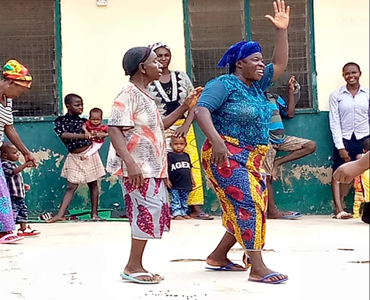
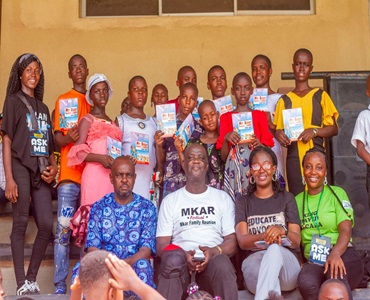
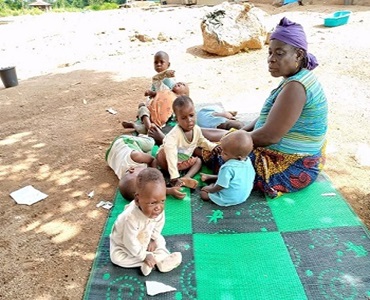
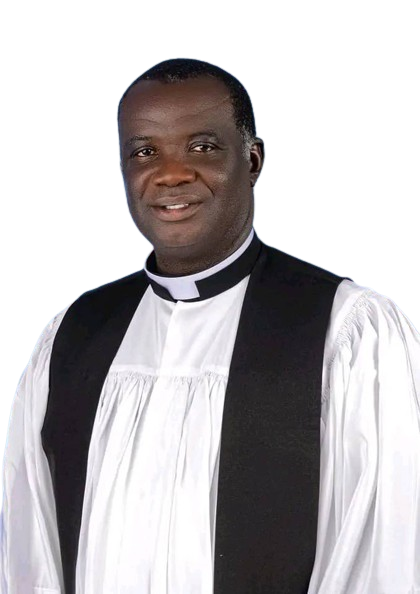
In the midst of life's trials and tribulations, there exists a beacon of light, a sanctuary of love, known as the Christian orphanage. Nestled within the embrace of faith and compassion, these sanctuaries stand as pillars of hope for the vulnerable and abandoned children who seek solace and belonging.
We strive to emulate this love by providing a nurturing and supportive environment.
The orphanage views itself as a family where children are welcomed with open arms.
The orphanage provides a faith-based education that not only focuses on academic learning but also instills important values.
Children are encouraged to develop their relationship with God through prayer, worship, and learning about scripture.
25
April
15
April
In the early forties when the British took control over Nigeria, the Hausa-Fulani practices of enslaving both the young and adult people of the middle belt kept diminishing gradually. During this time, travelers, especially those by the sea used to be stopped by the police, and their ships, canoes, and luggage were thoroughly checked. Surprisingly, on several occasions, children were found hidden under the matting floor of some of the ships and canoes by the traders. These youngsters were either stolen or bought as slaves from far and unknown places; they know nothing in regards to their whereabouts. In time, the authorities felt their plight and birthed the idea of caring for and helping these children out of their predicaments. In their quest to achieve their aim, the need for establishing a index for these indexless children arose. This, in turn, gave birth to the possible establishment of an Orphanage index (a place to house them). The summary of Orphans recorded from 1953 to 2021, under Rev T.T Nongo the 16th Director of the Mkar Orphanage index is briefly summarized below. The Mkar Orphanage index is at present, 81 years old since its establishment. At it's 81, below it's a brief record: *Number of Orphans admitted: 2045. *Number of Death: 138 *Number of Orphans that went to their relatives: 1862 *Number of Orphans, presently at the Orphanage index: 45
In 1940, the first orphanage index was established in Tiv land at Sev-av. The first orphans were lodged on July 1st, 1940 in the Girl's hostels. Miss Ingel Mosel took the responsibility of taking care of the Orphans for about four years, after which she inevitably left Tivland. After her departure, this humanitarian work could not continue, due to lack of staff. As a result of this challenge, the Orphanage index was relocated to Mkar Christian Headquarters. However, before the relocation, the Missionaries has already raised the Orphans to their midteens. By this time, the boys were able to cater for themselves in some ways; and the girls could be married. Many of them became Christians, and the girls were sought out by new Converts for marriage so that they could set up Christian indexs. This was a wonderful provision made by God to meet the need of the men; especially when girls of their own tribes had not yet responded positively to the gospel. Jonathan Wamada for instance got married to one of these girls, named Ra`utha (Ruth) while Filibus married another one called Astira (Esther). Both were fine and God fearing ladies. Astira had seven children, the last being born after Filibus died.
Contrary to the existing local
tradition, she refused to get married to another man, after her husband's death; but instead, insisted
on raising her children by herself. They were now, leading Christians in church communities and government.
Ra`utha and Jonathan on the other hand had no children. So, they adopted eleven children and raised them until
they become of age to marry. One of the sons was a teacher, who also served as a secretary to the then Ekas Benue
Church for many years. Through them, God turned the sorrows of many early children into a long life, full of blessings
and testimonies. God used the Missionaries, not just to help the Orphans; but also to introduce Christianity and strengthen
their faith in Tivland and even beyond. Between 1951 and 1952, it was like a break, because nobody took over the good work
of raising these orphans.
In 1962 January 25th, the DRCM built a better structure to house the motherless babies on the higher slopes of Mkar hill
beyond the Teachers Collage which is now, University of Mkar,
From January 1st, 1953 to August 26th, 1957, a passionate man called Dr. Bantus - a Dutchman arrived. He took over the work at Mkar Christian Headquarters of the Missionaries in Tivland. It was necessary for this work to continue, especially when a Tiv woman died at childbirth. When this happened, the life of the newly born infant was in grave jeopardy. Modern means of saving such life were not easily available in Nigerian remote areas, the possibility of another Nursing mother sharing her milk was very rare; and as such, many infants use to die, if involved in such situations.
With God's help, the DRCM saved a few numbers of them by setting up a baby clinic in Tivland, presently, with the availability of powdered milk together with a more enlightened community, many items they need for the Orphanage, even the in future are available. In this place, people can be taught to use the sterile bottle feeding method at simple infant feeding stages. Following Dr. Bantus take over at Mkar, they eventually established the first Orphanage index at Mkar, particularly at Afo,
the present Afo market (Kasua u Anchogholov)This happened soon after the CRC had agreed to take over the work from the DRCM in Western Tivland. In 1958, the sum (CRC) told the DRCM that it did not contemplate being involved in this act of Humanitarianism, saying “it is not a cold indifference to the serious plight of the babies but a feeling that it must give preference to such work as seems most profitable for the Glory of God under its limited resources” In 1955 therefore, the DRCM wrote a letter to “Ityo i Tiv” soliciting for financial Assistant in order to enable them fully execute the good work.

For More Information and enquringContact Us



 play video